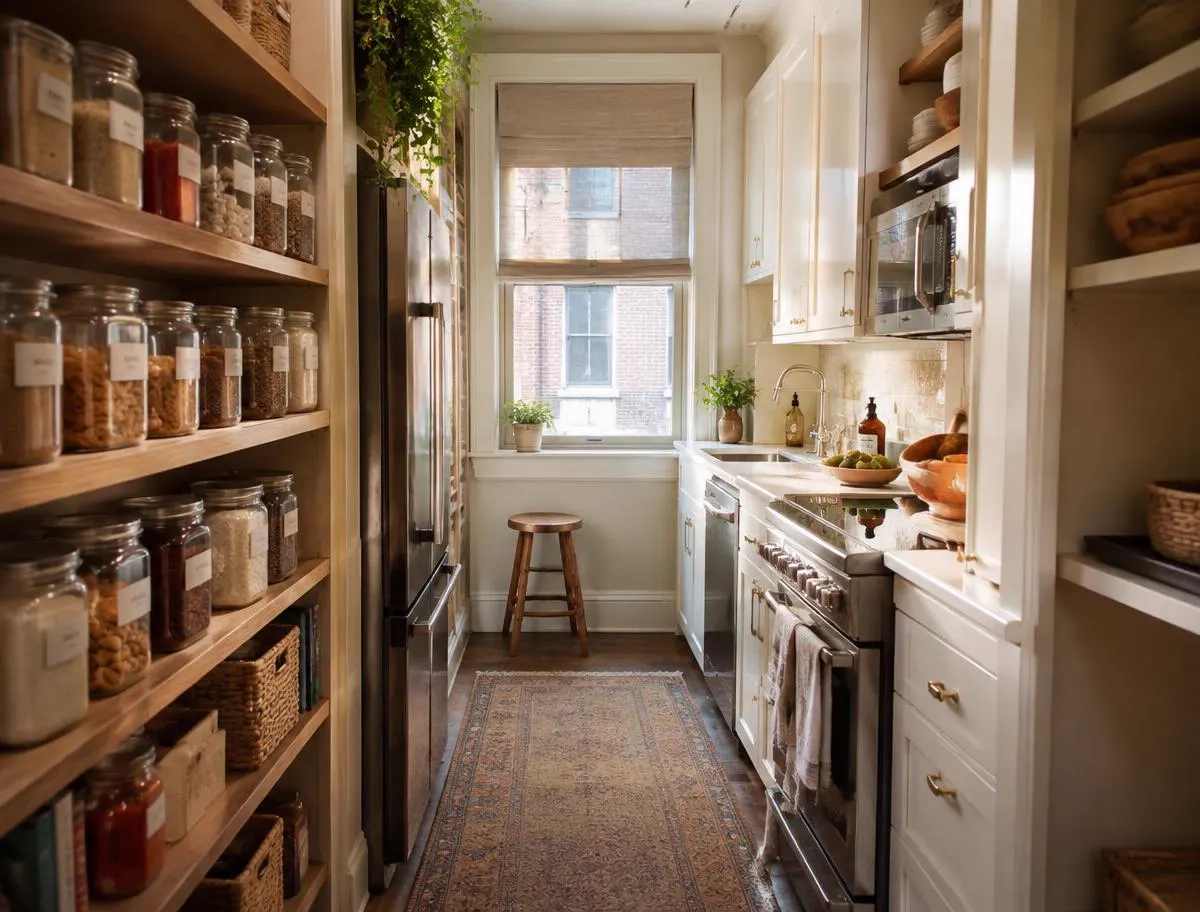
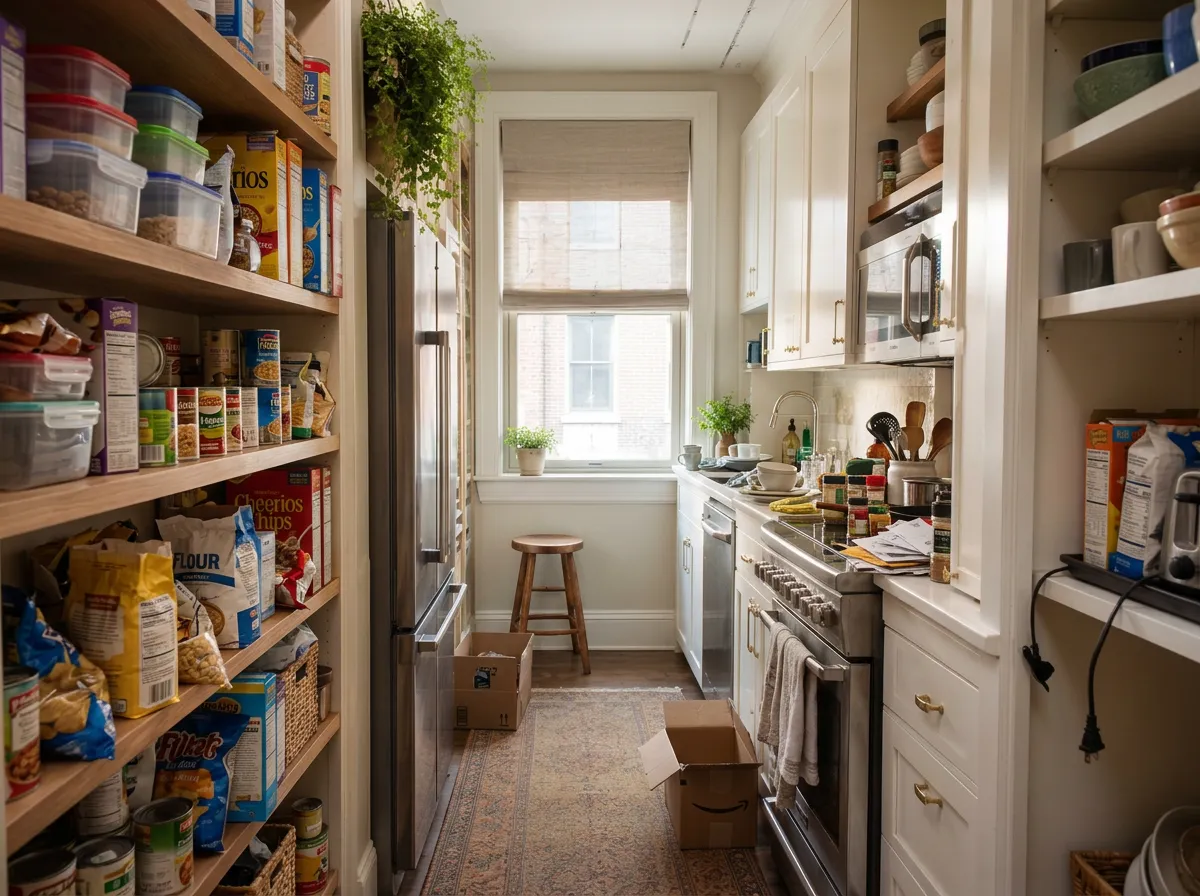
Do you clean the cabinets while organizing?
+
Yes, we wipe down every shelf and drawer once it's empty, using your products or our own gentle cleaner. It's a light clean, not a deep clean. If your kitchen needs degreasing or oven cleaning, we can recommend a cleaning service to come before us.
Do you throw out expired food?
+
We check every date and set aside anything expired for you to confirm. Unopened, in-date items you don't want can go to a local food pantry. Nothing gets thrown away without your okay, and we take trash and recycling down when we leave.
Which containers do you recommend for a small kitchen?
+
Square or rectangular clear containers, because they use shelf space better than round ones. For drawers, adjustable bamboo dividers. For pantries, clear bins with handles so you can pull a whole category out. We size everything from your measurements before buying. The best choice depends on what must fit, how often it is used, and whether the shelf has a lip or a low clearance. We can often reuse containers already in the home, and there is no requirement to decant food or create a matching set. Keeping original packaging may be more practical for certain ingredients, while a handled bin can make small packets easier to reach. The aim is dependable access and clear visibility, not a particular aesthetic.
Can you organize a pantry closet that's also storage?
+
Absolutely. In many apartments the pantry also holds cleaning supplies, paper goods and the vacuum. We give each category its own level, keep chemicals away from food and use the door for wraps, bags and spices. We start by identifying anything that should not share a shelf with food, then check whether the vacuum needs a full-height bay and whether paper goods are better stored outside the kitchen. A narrow closet can still work when heavy items sit low, daily supplies are visible, and less-used stock is contained rather than stacked loose. Door storage is evaluated for clearance so it will not catch on shelves.
Do I need to empty the kitchen before you arrive?
+
No. Leave everything as it is. Emptying is part of our process, because seeing the whole inventory at once is how we plan the zones. Just clear the counters a bit so we have room to sort. If the kitchen is also the main work surface in your home, we can agree on a temporary staging plan before beginning, such as using a dining table or one cleared section of counter. You do not need to pre-sort food, buy containers, or make decisions in advance. If you have dietary needs or items that must remain untouched, tell us at the start so those boundaries are clear.
Can you work around a rental kitchen with fixed shelves?
+
Yes. We plan within the existing cabinet footprint and avoid assuming that a landlord will approve drilling or permanent changes. We measure openings, note shelf spacing and use movable organizers only when they genuinely improve access. If shelves are unusually deep, we may create front and back zones so reserve stock does not hide daily staples. For a shallow cabinet, a simple category boundary can work better than a product. We can also identify items that are better stored elsewhere, such as occasional entertaining pieces or bulk paper goods, so the kitchen is not carrying every household category.
What if my household cooks very differently from week to week?
+
The layout can support more than one routine. We ask who uses the kitchen, what meals are typical, and which tasks happen most often, then position shared basics where everyone can reach them. A family that packs lunches may need a dedicated shelf for containers and snacks, while someone who cooks elaborate dinners may prioritize prep tools, spices, and cookware near the work area. We leave some flexible capacity for changing groceries and seasonal habits. During the walkthrough, we can test the sequence by mentally following a real task, from taking ingredients out to cleaning up.
Do you need me to be home during the full project?
+
Your input matters for decisions about what stays, what moves, and how the kitchen should function, but we can agree on check-in points rather than requiring constant participation. We begin by confirming priorities and boundaries, then pause when a decision needs your approval. If you step away, we do not discard or donate anything without permission. A final walkthrough lets you see the zones, request practical adjustments, and ask how to maintain the setup. Share building access instructions and any scheduling constraints when requesting a quote so we can plan the visit realistically.